
Highly Sensitive Brain Associated with Chronic Pain
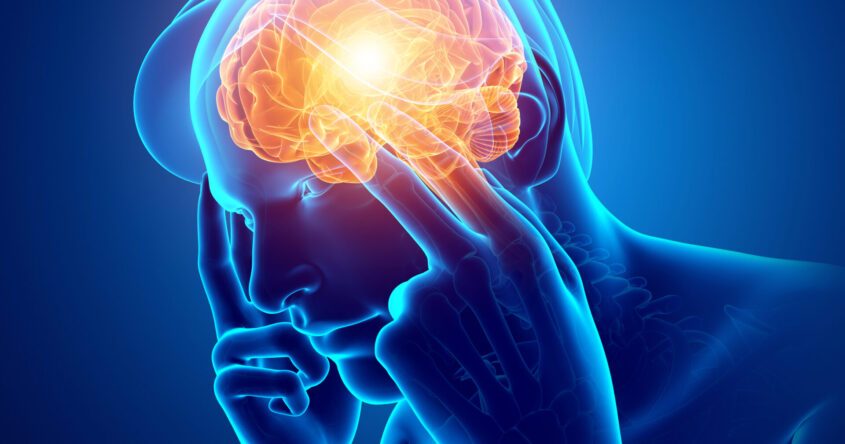
One of the things I see in a lot of patients I work with is high sensitivity. Many have heard of the highly sensitive person (HSP) and you may think of yourself as one. Studies show relationships between high sensitivity and neuroplastic symptoms. In one sample of adolescents who reported chronic pain, the proportion of highly sensitive individuals in this group was 45.7%. Those in the high-sensitivity group reported higher pain-related distress compared to the medium and low-sensitivity groups.
The more sensitive you are (as you could imagine), the more you acutely pick up information, and the more quickly and intensively your brain will react to that information. Sensitivity is an important area to address in those who are highly sensitive as we can teach the brain to become less sensitive with neuroplastic training.
One study at the University of Michigan found that patients with fibromyalgia (one type of neuroplastic symptom) have brain networks primed for rapid, global responses to minor changes. This abnormal hypersensitivity, called explosive synchronization (ES), can be seen in other network phenomena across nature. “For the first time, this research shows that the hypersensitivity experienced by chronic pain patients may result from hypersensitive brain networks,” says co-senior author Richard Harris, Ph.D., associate professor of anesthesiology at Michigan Medicine with the Chronic Pain and Fatigue Research Center. “As opposed to the normal process of gradually linking up different centers in the brain after a stimulus, chronic pain patients have conditions that predispose them to linking up in an abrupt, explosive manner,” says first author UnCheol Lee, Ph.D., a physicist and assistant professor of anesthesiology at Michigan Medicine.
“We again see the chronic pain brain is electrically unstable and sensitive,” Harris says. He says “this type of modeling could help guide future treatments for fibromyalgia (neuroplastic symptoms) that transform a hypersensitive network into a more stable one. These regions could be targeted in living humans using noninvasive brain modulation therapies.”
I teach neuroplastic patients how to modulate (re-wire) the brain into a less sensitive one. We can all learn how to do this as the brain is neuroplastic. It takes practice just like anything one learns to do but well worth the work to live from less sensitivity and less neuroplastic pain.